
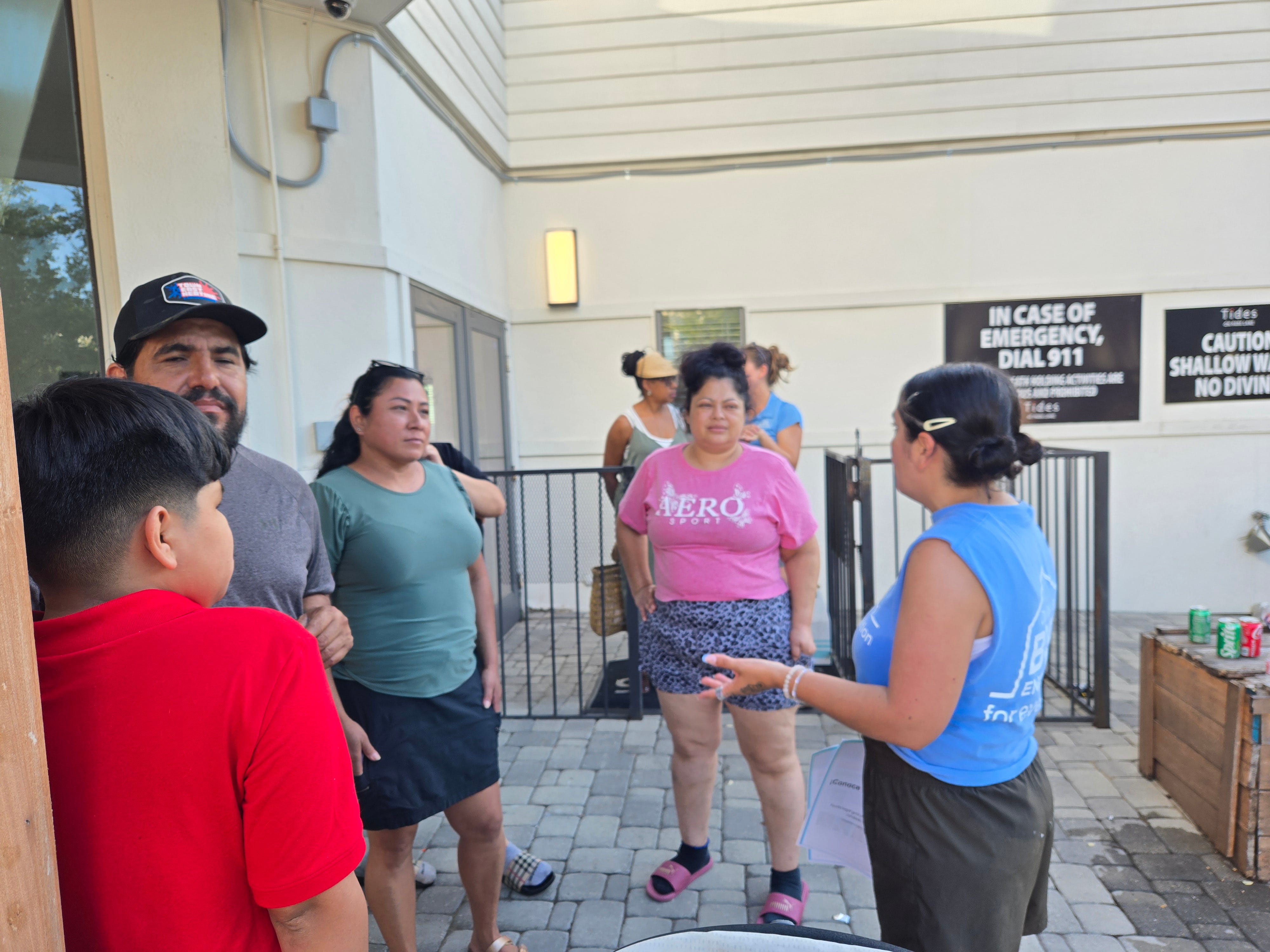
Happy Labor Day!
A recurring theme in my writing centers on working-class communities: people who, through no fault of their own, find it harder each year to pay bills and feed families. We Democrats empathize and clamor to tax the rich, yet air bitter grievances when these same neighbors stay home on Election Day or vote Republican.
This Labor Day, I want us to take a step back and recognize that no one issue and no one voter exists in a vacuum. People don’t wake up one day, have all the facts and reason at their disposal, and decide to support Trump. As I’ve previously written, people vote based more on how they view themselves in society and who they think will stick it to the other side. And if our side continues to ignore the real needs of the working class, we will continue fighting uphill political battles.
A large part of the working class, especially in urban areas like Dallas County, lives in apartments. So today, I want to share what I’ve been working on for almost the past year: a new and exciting project with the Dallas Housing Coalition to organize renters as we give them a stake in their communities and a seat at the table. I’ve also included DHC’s interview of me on their Housing for All webinar at the end of this post.
Origin story
In November 2025, I attended the Dallas Housing Coalition’s Resident Housing Summit at St. Paul United Methodist Church. Surrounded by discussions centered almost exclusively on single-family homeownership, I felt out of place. I rent an apartment, I thought.
When the breakout leader asked what I wanted to see in my community, I skipped straight to the point: “How can I, as a renter, make sure my voice is heard at City Hall?”
Heads nodded around the circle. One attendee noted that while advocates regularly speak up for tenants' rights, renters themselves remain fundamentally unorganized.
“Why don’t you organize renters in Dallas?” the woman next to me asked, smiling as if daring me. I looked at her, puzzled. I had sworn off organizing for the quiet comfort of crunching political data behind a screen. But as others chimed in to egg me on, I caved. At the very least, I’d ask DHC leadership.
A few weeks later, anti-eviction advocate Tura Stewart and I were co-chairing DHC’s newly minted Renters Working Group. When prominent legal-aid and housing groups across Texas packed our first call, followed shortly by city planning staff, one thing was clear: we had hit a major nerve.
What people must understand about renting
As a proud renter who long ago made the decision never to own a home, I’ve experienced how people in different arenas treat me. In politics, the word bandied about for renters is transient. When I started volunteering on political campaigns, some highly admired community leaders explicitly made it a mission to avoid apartments. “I don’t feel like walking up those stairs,” one would announce. Another would use locked gates and keypads as an excuse to bypass all apartment complexes.
But most objectors, within the safety of fellow volunteers, would simply say the quiet part out loud: “They’re transient. They’re not going to be there very long.” Mind you, they would say this in front of me, smirking with the patronizing air of “Don’t worry, you’re one of the good ones.” Secretly, I wanted to assure them that some of my best friends are homeowners.
While true that many renters do move, they relocate based purely on dire financial need. Here are some key data points from the Child Poverty Action Lab’s 2025 City of Dallas Rental Housing Needs Assessment report:
58% of Dallas residents are renters
59% of renter households are considered low-income, meaning they earn 80% or less of the Area Median Income
The median homeowner earns roughly $39,000 more per year than the median renter
Half of the renter population is housing cost-burdened, meaning they pay more than 30% of their gross income on rent and utilities
Black renters, Hispanic renters, senior renters, and renter parents are over-represented
The median bachelor’s degree holder cannot afford the mean rent of a 2- or 3- bedroom unit
There is a gap of more than 46,000 affordable units for renter households earning less than 50% Area Median Income, which is $52,000 for a family of four
Renters don’t move because they lack community roots. Scouting a unit, packing a life, and burning hourly wages takes an exhausting toll. Nobody relocates for fun; they move because Dallas lacks affordable homes, strangled by outdated zoning and relentless NIMBY intransigence.
But if we Democrats genuinely stand for the working class, we can’t confront this reality and casually dismiss renters as transient or as people who refuse to invest in their communities. We have to see our neighbors fighting to survive, and take meaningful action.
The U-shaped curve of local elections
To understand why renters are shut out, look at who actually shows up to vote. In municipal elections — the ostensibly nonpartisan races deciding who paves roads and approves zoning — turnout follows a brutal U-shaped curve:
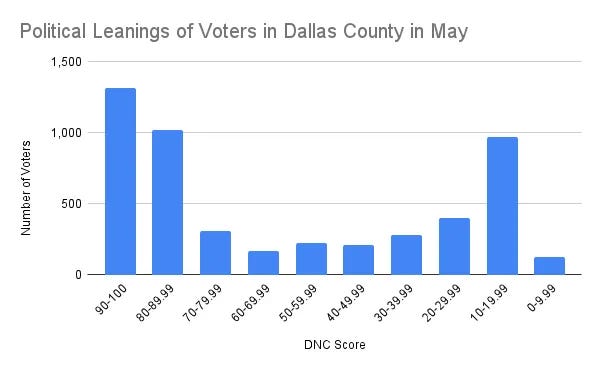
The extremes dominate off-year municipal politics. High-information, highly partisan voters turn out in droves, while the broad working-class middle — the people disproportionately living in multi-family housing — remains virtually invisible at the ballot box.
So who are these voters? On the left and right, that’s easy: Democrats and Republicans. But they’re not just any Democrats or Republicans — these are the rabid folks like myself and you reading this Substack. We are the ones who know virtually every local issue and may even have some politicians’ contact information on our phones.
I call ourselves politicos. Are we extreme? Absolutely. But extreme in our obsession, not necessarily our ideology. Zionist Democrats can visit the polls for every local runoff, and MAGA Republicans can show up only for every presidential election. The real concern is properly channeling that passion to motivate the people in the middle of that curve to vote.
And who are the people in the middle? Contrary to what countless politicos think, they’re not “moderate” voters in the sense that they flip back and forth between parties. These moderates largely reside in the working class and hold spotty voting records, needing inspiration to march to the polls at all. Many feel left out of the political system, commenting that neither party addresses their core economic needs. Exasperated and cognitively overloaded, these working-class voters tune us politicos out if all we do is shout at them which politicians to support. And a good number of them also live in apartments.
The U-shaped curve of housing debates
That electoral chasm directly mirrors City Hall’s housing battles. Sit through a City Council or City Plan Commission hearing, and you see the exact same dynamic:
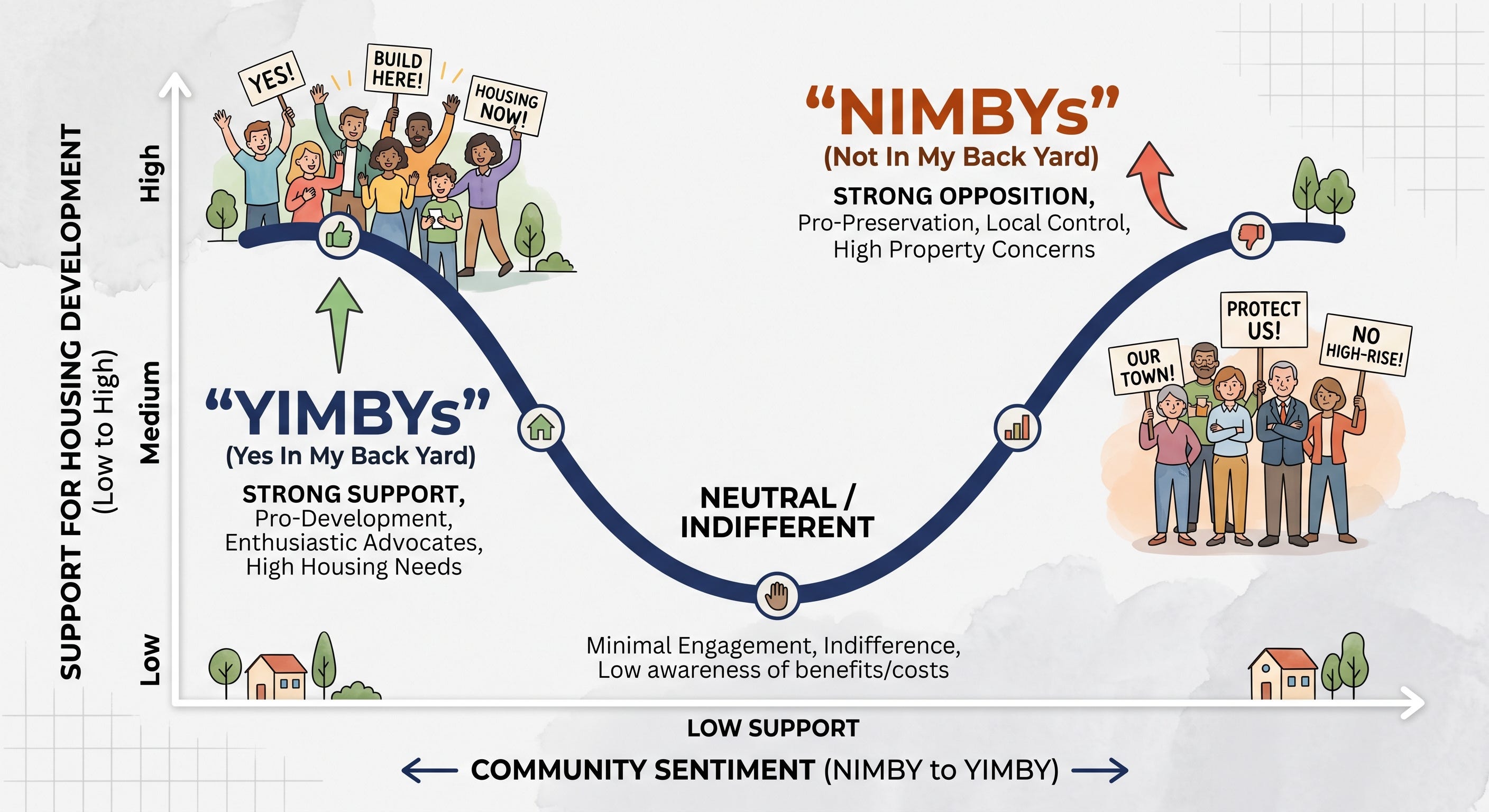
Broadly speaking, on the left stand the YIMBY (Yes In My Backyard) activists, and on the right are the NIMBY (Not In My Backyard) adherents. YIMBYs realize that, in cities like Dallas that need north of 46,000 affordable units, we can no longer afford to wait. NIMBYs argue for more nebulous qualities like preserving neighborhood character.
But collectively, they far outnumber those in the middle who care about housing debates. The housing moderates share many of the same traits as the local-election moderates: they feel entirely left out of the conversation by warring factions that yell past them. Exasperated and cognitively overloaded, these working-class people tune us housing advocates out if all we do is shout at them to join our side. And a good number of them also live in apartments.
It is this U-shaped phenomenon in both local elections and housing that prompted me to coin the term the activist valley.
The activist valley
When we overlay the U-shaped curves of local elections and housing advocacy, we quickly realize that many of the same people occupy both ends and the middle.
This is the activist valley: the U-shaped curve of public engagement where polarized extremes dominate civic discourse while the working-class majority remains unheard and disengaged. It spans nearly every issue — housing, transit, clean air. Overlay these curves, and you find the exact same players holding the megaphones on the edges and the exact same disenfranchised majority stuck in the ditch.
I keep writing about how progressive leaders must address the material needs of working-class voters. People will not vote if they have no tangible action plan to fulfill the lower levels of Maslow’s hierarchy of needs — food, shelter, safety.
And while motivating a broad swath of disenchanted voters for multiple varied issues may sound daunting, we in fact spot a silver lining. We don’t necessarily need to arm ourselves with talking points for every single one of these issues. We only need to do it for one, and it’s been today’s topic of conversation. It will solve at least two of Maslow’s needs. We need to meet renters at their doorsteps.
Organizing renters as a tool for civics
After months of carefully architecting a strategy, the Renters Working Group was ready to knock on doors.
Pilot program: Vickery Meadow
For our pilot program, we picked Vickery Meadow, an ethnically diverse Dallas neighborhood composed almost exclusively of apartment complexes. One of the most densely populated communities in the city, with inexpensive housing and public amenities including healthcare facilities and public transit, it is known for attracting significant numbers of immigrants and refugees.
We also picked Vickery Meadow because its residents need substantial help. Service requests made to landlords go unanswered for months, and eviction heat maps point to the neighborhood as one of the hottest in Dallas. Naturally, it is not far-fetched to believe that landlords feel emboldened to take advantage of their own tenants based purely on cultural and language barriers.
Short-term goal: Quantitative and qualitative data collection
The team devised a three-tier plan of attack. First, we had to collect data.
In a July 2025 post, I stated that true data collection consists of gathering quantitative and qualitative data — we need both hard numbers and the human stories behind the numbers to present to elected officials. One without the other does not suffice. Numbers convince local leaders of the problem, but the stories move them to act on it.
So we created a survey to give renters as we canvassed. The questionnaire achieves both angles of data collection, with queries ranging from amount of time waiting for service repairs to problems involving appliances.
In just two hours of door-knocking, the qualitative data spoke for itself. One resident invited us inside and spent 20 minutes unburdening all her ignored complaints. The detail that haunted me: whenever she ran her microwave, half the apartment went dark. In Vickery Meadow, and across Dallas, neglect like this isn’t an anomaly.
These stories almost never make it to City Hall. It’s not that renters don’t care; it’s that surviving systemic neglect consumes every ounce of their cognitive bandwidth. When your ceiling is leaking or your kitchen shorts out your living room lights, testifying at a 9:00 AM Wednesday council hearing isn’t on the radar. That is the void. Organizing renters isn’t just about logging survey forms — it is about building an institutional bridge from the living room floor directly to the horseshoe.
Rental resource fairs:
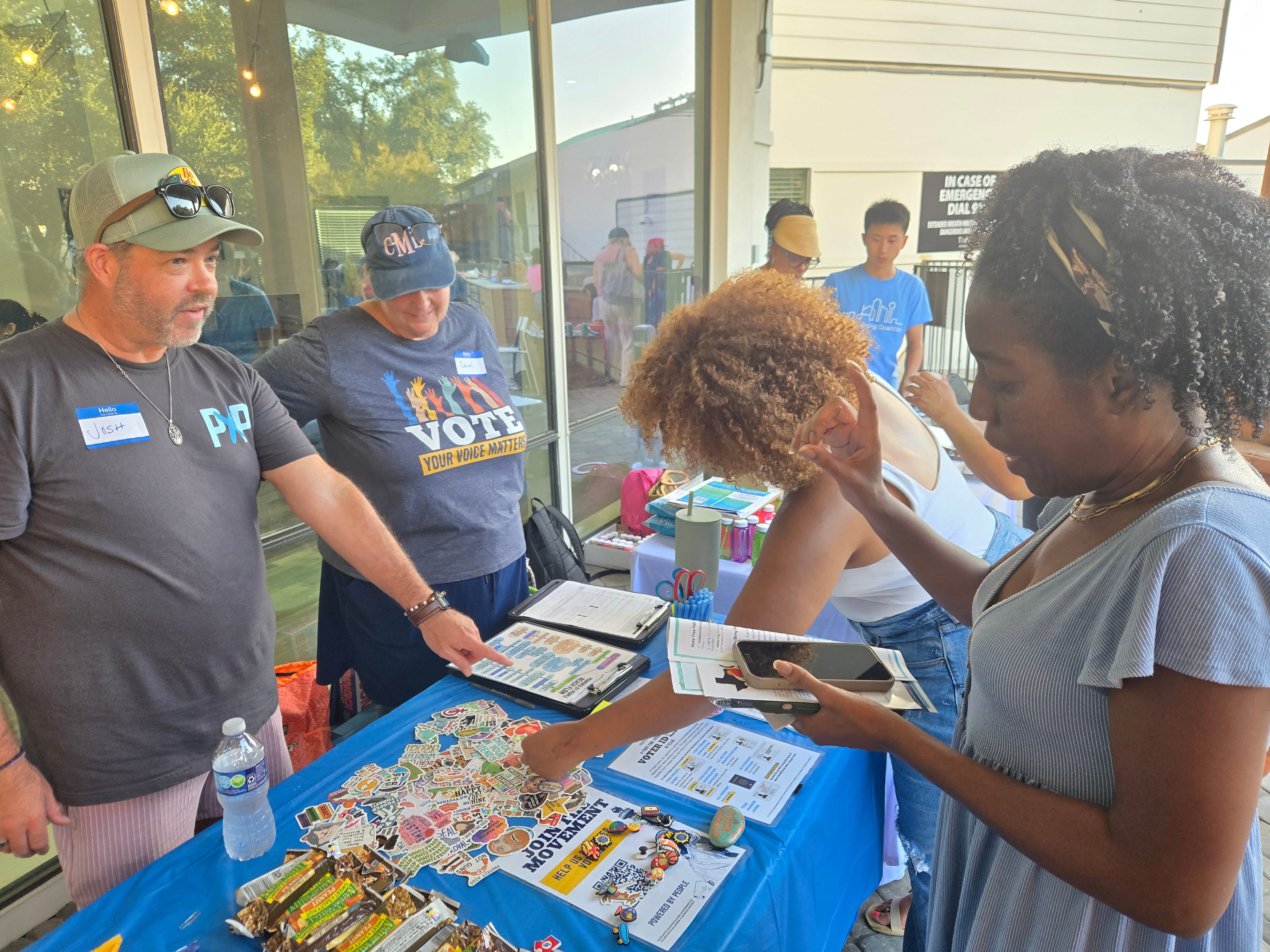
At the end of our canvassing effort for a given community, we host a rental resource fair. For our inaugural rental resource fair in Vickery Meadow, several organizations handed out critical resources.
Along with the tons of handouts from DHC, the Dallas Eviction Advocacy Center, for instance, ensured that renters had the organization’s English- and Spanish-language renter handbooks. Fighting Homelessness spent time with them to understand their concerns. And Powered by People registered voters and educated them on the election process, demonstrating to renters that they indeed hold considerable civic power.
These rental resource fairs essentially signify a civic arrival for a community’s renters. It is the moment they start taking control.
Medium-term goal: Changes to municipal policy
We can’t simply visit apartment complexes and communities one by one and report our findings to political leaders. The next step is policy change that would affect all Dallas renters.
I will keep this brief as we are actively in the planning phase of this tier and don’t want to reveal too much. However, we are seeking to change the rules that landlords have to abide by. This involves many months of sitting down with city staff and council members, as well as launching a campaign, to permanently rewrite the standards the city places on landlords.
Long-term goal: Giving renters a stake in their communities and a seat at the table
An overhaul of municipal policy will hand renters more physical safety, but they will likely still feel disenfranchised. That’s because organizing renters was never just about fixing their microwaves or exterminating roaches. It’s about giving space to people who feel left out of the system.
In his 2025 book, The Civic Brand, Ryan Short contends that a place’s brand is not logos, slogans, or tourist campaigns, but the shared identity, lived experience, and collective stewardship of the people who inhabit it. He emphasizes that a civic brand strengthens our sense of ownership and that residents must believe they hold the power to shape their environment.
For property owners, HOAs excel at this in some regard. They teach people to care about their immediate physical surroundings and give members a structured vehicle to protect their perceived self-interest. When a zoning variance, unmaintained common areas, or traffic hazards threatens the immediate neighborhood, HOAs provide a framework to organize residents quickly, hire representation, and show up in force before city boards.
Where they fail, though, is fostering human dignity, cultural preservation, and shared place identity. HOAs exist mainly to protect property values and enforce rigid conformity. When an organization’s primary mandate is aesthetic enforcement and property appraisals, it nurtures NIMBYism rather than broad civic solidarity.
On the other hand, renters don’t own property. They would have no mechanism of imposing aesthetic mandates on land they don’t own. So whereas a traditional HOA for property owners focuses inward, an HOA parallel for tenants, or a system of tenant unions, would focus outward.
A citywide system of tenant union’s identity would derive from seeking equity in the system much the same way labor unions do. Labor unions hold corporate bosses accountable and attract politicians to ask for their votes. A tenant union’s ultimate goal would be accomplishing the same.
All of this is about building civic power from the ground up
Make no mistake: Organizing renters is first and foremost about tackling their concrete demands. But if that’s all we do, it would be an enormous missed opportunity.
The activist valley is a pernicious and systemic flaw in our civic architecture. Our neighbors who pay no mind to elections, especially local elections, also probably don’t know the ins and outs of public transit policy or housing theory.
But what if we organized them, especially the ones who rent and stay lodged in the middle of that valley? What if we helped fix their immediate concerns, then engaged them in other areas of civic life?
What if we engaged them on the infrastructure that shapes their daily survival — the rim-bending potholes on their commute, a protected bike lane to the train station, or transit-oriented development that eliminates the crushing expense of owning a car?
We must engage disaffected people, but especially renters, if we are serious about providing sustainable and equitable civic power. The above local issues directly touch everyone, but they by no means represent the end of a renter’s civic understanding.
Registering people to vote and following up with them will inherently encourage them to study up on not just local issues or local leaders, but also broader statewide and federal initiatives in other elections. We must pull renters out of the massive void of the activist valley and into the civic fold.
In the end, organizing renters has less to do with housing and more to do with civics.
Here is my interview on Friday, September 4 as part of DHC’s weekly Housing for All live webinar series: