


You know what time it is: time for me to dive into this election data. This cycle proved especially difficult because of this year’s redistricting. Dallas County cut down the number of precincts by around 100, so I had to reorganize my data scaffolding before I crunched the numbers. Moral of the story: redistricting sucks.
TLDR
For the Senate race, Jasmine Crockett won 58.90% to James Talarico’s 39.87%. Talarico won predominantly affluent and white communities, and Crockett gained the support of predominantly black communities. Hispanic and other ethnic communities were much more split. Overall, this was a dominant performance for the Dallas Congresswoman, but it wasn’t nearly enough to help carry the state.
For the District Attorney race, Amber Givens obtained a shock victory, at least to me, to become the presumptive next DA of Dallas County. (She faces no Republican opponent in November.) She defeated incumbent John Creuzot, 53.85% to 46.15%. Givens built a diverse coalition of white, black, and Hispanic voters in mostly middle-class communities. Creuzot, on the other hand, won mostly white and affluent communities.
The plan for November? Hopefully learn from these two campaigns and build a Big Tent to win.
By the way, AI explainer video for you.
Overall turnout
Senate race
Across the county, 18.95% of registered voters cast their ballots in the Democratic Senate race. Here are the top five communities that did so:
DeSoto: 37.27%
Lancaster & Glenn Heights: 30.93%
Cedar Hill: 29.34%
Southwest Dallas: 25.80%
The Hills: 25.36%
And the bottom five:
Rowlett: 15.01%
Irving: 14.22%
Sachse: 12.29%
Sunnyvale: 11.29%
Park Cities: 9.64%
Shout-out to DeSoto for winning this distinction. Democrats here consistently show up for elections big and small.
Unsurprisingly, the communities in the bottom five are, for the most part, conservative based on their past electoral history.
The Bellwether Award for this category goes to Richardson, whose 18.86% of registered voters visited the polls to decide between Talarico and Crockett. (Or, in the case of 1.23% of the county, whether they should instead throw their support behind Ahmad Hassan.)
District Attorney race
Across the county, 17.06% of registered voters cast their ballots in the District Attorney race. Here are the top five communities:
DeSoto: 35.58%
Lancaster & Glenn Heights: 29.26%
Cedar Hill: 27.76%
Southwest Dallas: 24.07%
The Hills: 23.76%
And the bottom five:
Preston Hollow: 12.77%
Irving: 12.25%
Sachse: 10.70%
Sunnyvale: 10.06%
Park Cities: 8.01%
DeSoto once again takes the top spot here, while the usual conservative suspects make their way to the bottom.
The Bellwether Award for this category goes to South Dallas, with 17.23% of its registered voters making their voices heard.
Talarico vs. Crockett
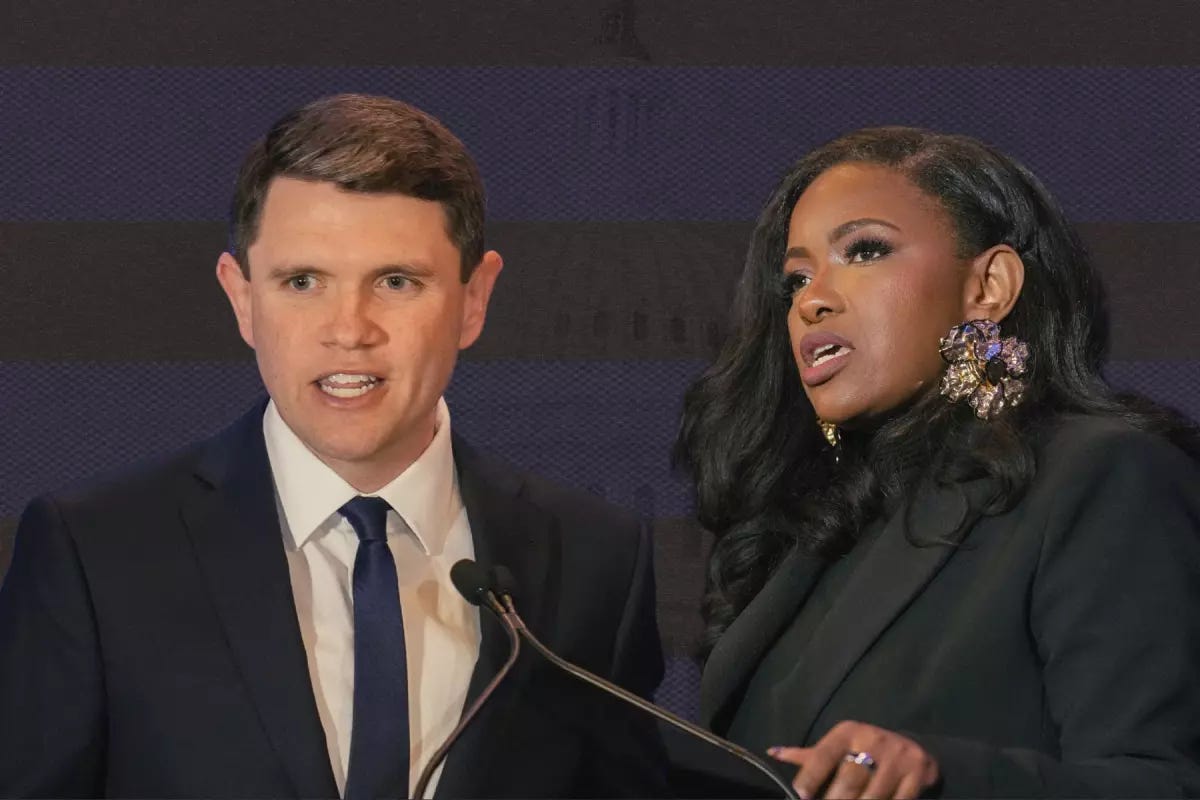
On to the more fun stuff. How did each candidate for Senate fare across Dallas County? As I stated in the beginning, Crockett beat Talarico 58.90% to 39.87%.
Top 5
Here are the top five communities that voted for Talarico:
Park Cities: 88.33%
Preston Hollow: 81.95%
Greenville: 76.23%
Northwest Dallas: 68.59%
Coppell: 65.03%
And here are the top five for Crockett:
The Hills: 94.07%
Lancaster & Glenn Heights: 93.25%
DeSoto: 93.20%
Cedar Hill: 88.19%
Southwest Dallas: 86.60%
For the most part, Talarico won the votes of low-turnout Democratic communities. Conversely, Crockett received support from high-turnout Democratic communities.
Rowdy Rowlett
The Bellwether Award for Talarico supporters goes to Rowlett, with 39.34% of its registered voters heading to his camp.
And guess which community received the Bellwether Award for Crockett supporters? That’s right, it’s Rowlett once again, with 59.86% of its registered voters casting their ballots for her. This upper-middle-class suburb in the northeast portion of the county is not known for being a Democratic bastion, with only 45.86% of its registered voters casting their ballots for Kamala Harris in November 2024.
If Crockett wanted to run up the score in her home county of Dallas, a more blue community would’ve better represented her share of support. For instance, if we take Talarico’s 71.3% victory in his home of Williamson County and apply it to Dallas County for Crockett, Pleasant Grove would’ve been that community, as she received 71.37% of the share there. Pleasant Grove voted 72.06% for Harris in 2024.
Underperforming in key areas compared to Harris in 2024
Now, if we inspect regions in Dallas County instead of communities, we’ll see a pretty clear story:
North: Talarico: 63.51%, Crockett: 35.31%
South: Talarico: 11.62%, Crockett: 87.82%
East: Talarico: 45.25%, Crockett: 53.49%
West: Talarico: 47.64%, Crockett: 50.20%
In the predominantly white communities in Northern Dallas County, Talarico won by a substantial margin. In the predominantly black Southern Dallas County, voters overwhelmingly gravitated to Crockett.
The more interesting dynamic is the more diverse communities in the East and West. Pleasant Grove is one of them, as we just mentioned. This southeast Dallas neighborhood is predominantly Hispanic, and Crockett vastly outperformed Talarico there. Similarly, the nearby suburb of Balch Springs easily voted for her with 73.43%.
But in Lake Highlands and Northeast Dallas, with large ethnic populations in neighborhoods like Audelia and Vickery Meadow, Crockett underperformed. She received 42.26% and 36.08%, in these communities, respectively.
To put that in contrast, in 2024, Lake Highlands voted 60.07% for Harris. Northeast Dallas rewarded her with 58.39%.
If we direct our attention to the western part of the county, the narrative reflects something similar to that of the east. In a black and Hispanic community like West Dallas, Crockett won their support with 65.53%. But in Irving and Northwest Dallas, with significant ethnic diversity, she garnered only 47.52% and 30.53%, respectively.
In 2024, on the other hand, Irving gave Harris 54.82% of its votes, and Northwest Dallas handed her 63.03%.
So by and large, voters in more diverse communities tended to choose Talarico over Crockett, even though those same communities awarded decisive victories to Harris just a year and a half earlier. The fact that Crockett won Dallas County by 19% is a testament to the fervent support of residents in Southern Dallas County. That backing, however, did not scale to the rest of the state. (It’s also worth noting that Talarico won huge swaths of the predominantly Hispanic Rio Grande Valley.)
Givens vs. Creuzot

This race, in my opinion, offers much more interesting insight.
I’m not going to get into the history of Amber Givens, Presiding Judge of the 282nd Judicial District Court, or the drama of why she chose to run against incumbent Democratic District Attorney John Creuzot. Because to me, even if that story informed the election results, it is still less fascinating than the actual outcome.
Givens beat Creuzot 53.85% to 46.15%.
Top 5
Here are the top five communities that voted for Givens:
West Dallas: 64.00%
Grand Prairie: 63.92%
Irving: 63.56%
Sachse: 63.35%
Addison: 63.32%
And the top five communities that voted for Creuzot:
Preston Hollow: 71.42%
Park Cities: 70.44%
North Dallas: 59.96%
Northwest Dallas: 57.39%
Greenville: 56.03%
We notice that Givens won with a more diverse — ethnically, economically, and politically — group of voters than Creuzot. Lower-middle- to middle-income communities, like West Dallas and Grand Prairie, joined racially mixed ones, like Irving, and even some conservative bastions, like Sachse. This alliance is what a true rainbow coalition resembles.
By contrast, Creuzot shored up support from mostly white and affluent communities, with the exception of Northwest Dallas. Preston Hollow, his political home base (if you know, you know), showed him the most love.
But what we also witness is the considerable drop of support from Preston Hollow to his #5 community in Greenville: 15.39%. The gap between #1 and #5 for Givens is only 0.68%. So the challenger performed much more consistently across communities than the incumbent, helping carry herself to victory.
South Dallas, stand up
The Bellwether Awards for Givens and Creuzot supporters go to South Dallas, with 53.92% and 46.08%, respectively. That is the same community that received the Bellwether Award for overall turnout in this same race. Also, in 2024, South Dallas broke for Harris with 84.65%.
What does this tell us? If South Dallas serves as the bellwether for anything in Dallas County, you know some shit went down. This race, unbeknownst to many observers, was going to shake things up for years to come.
But actually, the fact that a black and Democratic stronghold like South Dallas was only the bellwether, as opposed to boasting about its status as one of the top five communities that voted for Givens, is part of the real remarkable phenomenon here.
Givens voters compared to Crockett voters
The day after the election, I quickly assumed that the people in Southern Dallas County who voted for Crockett granted Givens the seat for DA. And perhaps, Givens managed to cobble together enough votes from elsewhere to guarantee victory. Almost the reverse, however, turned out to be true.
If we take the top five communities that voted for Crockett, we see a radical shift away from Givens. Here are those communities and how they voted for the next DA:
The Hills: 49.37%
Lancaster & Glenn Heights: 56.59%
DeSoto: 53.10%
Cedar Hill: 54.11%
Southwest Dallas: 51.46%
Those are 30- and 40-point yawning chasms between two candidates in two races. Clearly, voters in these communities did not feel nearly as comfortable with Givens as they did with Crockett.
It bears repeating, though, that Givens won precisely because of a diverse coalition mostly outside of Southern Dallas County, combined with just enough tepid response to her in that part of the county. Her local victory stands out as an example of how to build an actual Big Tent for Democrats in larger elections: Reach out to everybody to earn their support, and be nice enough to those who dislike you to hopefully have them change their minds or at least stay at home.
Onward to November
So let’s talk about that Big Tent strategy.
Since the Democratic Party’s devastating loss in November 2024, I’ve witnessed two camps of Democrats: those who want to reach out to people who hate us, and those who want to almost entirely focus on people who might vote Democratic.
The second group accuses the first group of being “moderate.” The first group claims that the second group is swinging too far to the left.
Both camps gloss over nuanced perspectives in favor of often simplistic, sweeping rhetoric. Without delving too much into it, the more appropriate approach is to relentlessly stick to the issues that matter to every single voter in the area you’re running to represent – no matter what party, or lack of party, they represent.
Talarico and Givens did that. Talarico’s unifying message of galvanizing against the corporatists who run this country, mixed with his religious takes of justifying why we must do so, is what won him the Democratic nomination for Senator in a state like Texas.
Givens, although stylistically different and more technical because of the position she occupies, did not shy away from naming the enemy and detailing several policy proposals in order to form what she calls “smart justice” for Dallas County.
Both candidates devised overarching themes for their campaigns and proceeded to attempt to include as many groups as possible into their coalitions by speaking the language of those groups. That is how you earn the trust of voters, and that is how you win.